Rural Education2020/12/23
Hsinchu Children Experience AIoT, Igniting their Interest in Programming
Programming language is taking root as the new language of future generations
As AI and the Information Era gradually highlight the significance of “programming” as the next generation's collective language, who should play the torchbearer of this key technology?
To help schools lacking in computer resources settle into the 2017 course curriculum's computer programming education, the TSMC Charity Foundation worked with professor K.A. Wen (溫瓌岸)’s team at National Chiao Tung University (NCTU) to create the AIoT Programming Education Plan. By using their Rabboni and Scratch tools – a sensor and a programming software, respectively - the team allows teachers and students at five Hsinchu primary schools to learn from hands-on practice and turns these spaces into incubators for skills in AIoT.
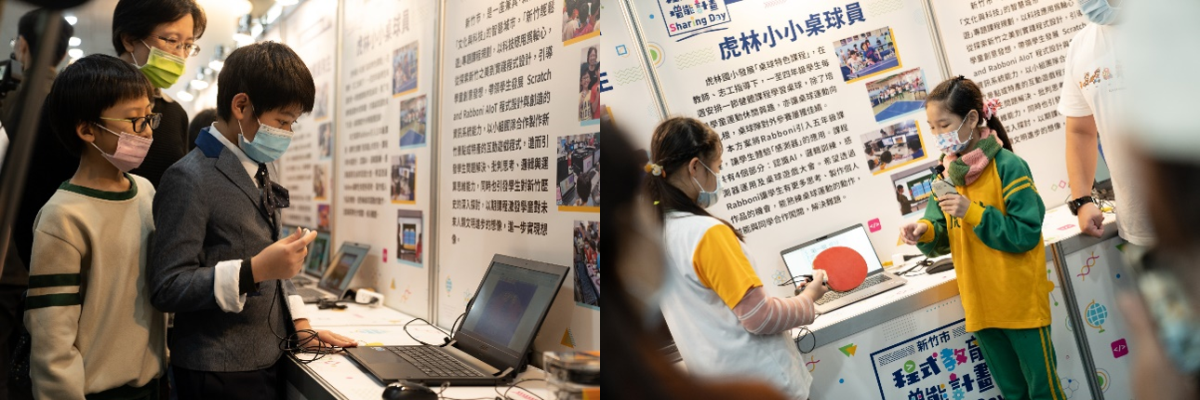
Dec. 23, Sharing Day: School children present results from their motion sensing game designs.
Ms. Sophie Chang, Chairperson of the TSMC Charity Foundation, was deeply moved by the underlying spirit in the event – sharing and collaborating – as the foundation joined NCTU's team in applying their equipment and technology alongside 24 of their low-income students, who led computer science teachers from among five primary schools, 18,000 of Hsinchu's students were taught to use new programming tools and ponder topics which spark their interest. On Dec. 23, the foundation, together with NCTU and Commonwealth magazine, organized Sharing Day to showcase the program's results from eight schools, in which 154 principles, students and teachers from 25 schools attended.
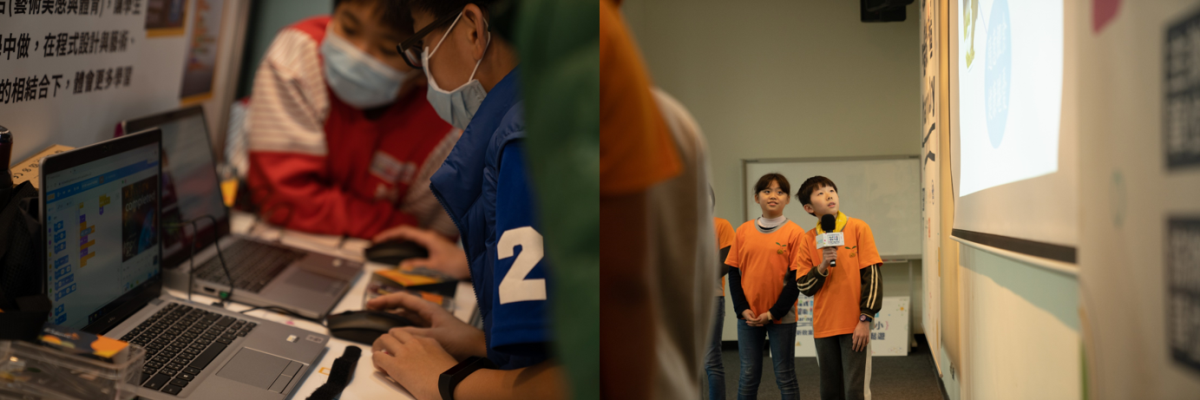
“We're searching for an effective way for technological education to take root since primary school,” says the head of Hsinchu's Department of Education, Chen Ching-tao (沈靜濤), stating that students should have the necessary computer science equipment and begin learning as early as possible. Additionally, the tools developed by the NCTU team make programming much easier. As the foundation's vice executive director Brad Peng (彭冠宇) put it, “The new generation of programming software adopts intuitive designs. As long as you can use a mouse, you can learn how to program!” Likewise, NCTU acting president Hsin-hung Chen added that “Rabboni” comes from the Hebrew word meaning “master” or “teacher”. Regardless if they eventually choose to major in liberal arts or science, having AI and computer programming become a basic skill for this next generation will allow them to use it in any professional field.
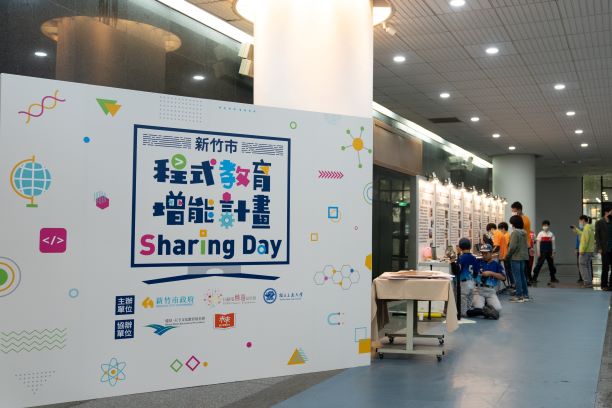
After igniting this torch, the results and experience gathered will hopefully spread to other campuses, and together face the challenges of computer science education in this new information age!