Closing the gap between urban and rural students remains a tough issue for educators. Privade and corporate donations of computer equipment and other materials can help, but even if we improve the distribution of public resources, can these measures truly solve problems in rural education?
Unfortunately, the answer might be “no”. Rural children often lack confidence and low motivation to study among indigenous households with disabilities or, for a variety of reasons, with absent parents. These means they may not have someone to talk to, to know themselves, explore their surroundings, and ignite their curiosity, so simply adding school materials and courses may not resonate as much with children in the countryside. Software can be key in improving their education, but so is finding the right person to be by their side, who can intuit the student's interests and needs, as well as spark his or her enthusiasm for learning and build their ability for self-learning.
The number of teachers leaving Taiwan's rurality has remained high. According to the Annual Report on Teacher Training from 2015-2017, 1.7% of junior high school teachers and 2.6% of primary school teachers had left in 2014, while numbers for rural schools in the same year were 5.8% and 8.3%, respectively.
Despite many efforts from organization, volunteer programs do not suffice in fulfilling demand. Even those who care for the students'plight find it difficult to stay in the countryside long term, so building a support system to stay is a step closer for solving shortage issues.
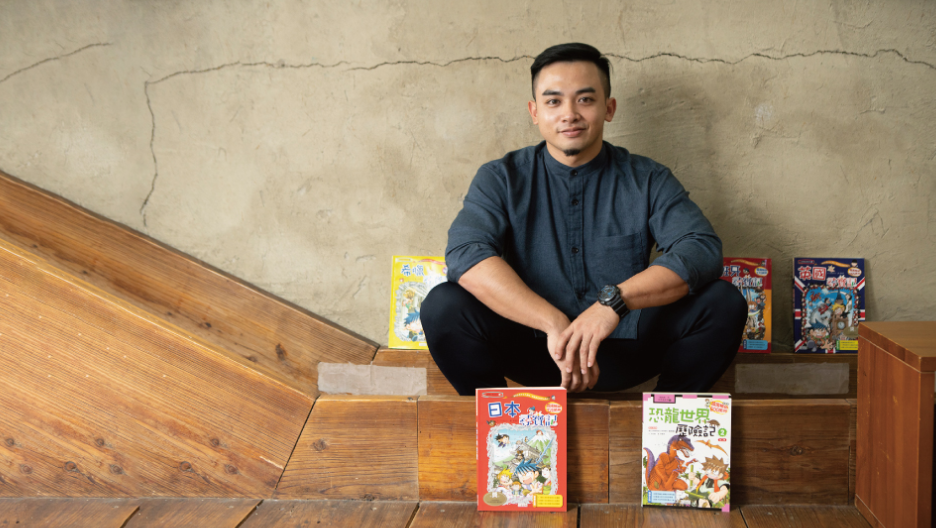
As a result, Taitung charity Kids'Bookhouse (孩子的書屋) joined National Taitung University in joining resources. University students used books provided by the charity to help rural students study, becoming their “mentor buddies” and creating an program that goes beyond a one-day charitable event.
For the past 20 years, Kids'Bookhouse has mentored over 2,000 children from low-income households and has become their second home. However, the charity's founder and devoted guide, Daddy Chen (Chen Junlang), unfortunately passed away in July 2019.
Daddy Chen's eldest son, Chen Yanhan, still clearly remembers seeing his father the day before his passing, never imagining it would be the last time: “My mind was in a flurry, I didn't know what to do. I immediately set off from Taipei to Taitung, playing interview videos of my father and crying as I drove.”
Chen Yanhan grieved throughout the next two months, refusing to think of other matters, but then he remembered the wonderful childhood moments he shared at Kids'Bookhouse, and what would happen if its children lost their safe space. This led him to decide on continuing to care for the children and lay new paths for the charity's mission.
“My father would say that we share the same special character, and so should inherit the book house,” he stated. However, Daddy Chen's original plans of passing it on to his son within five years was cut short, and 28-year-old Chen Yanhan had barely studied a year under his father when he passed, so he had no choice but to roll up his sleeves and get to work.
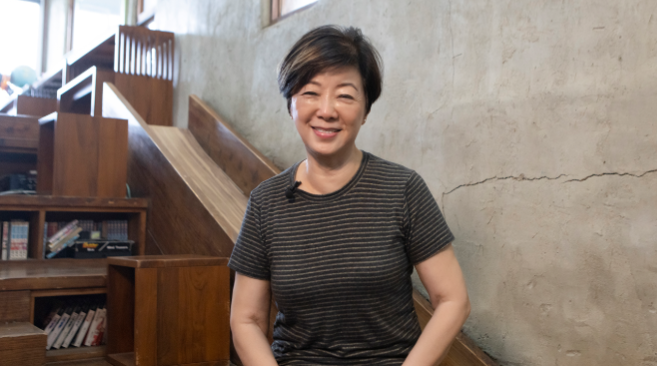
As Kids' Bookstore dramatically changed, it caught Chairwoman Sophie Chang's attention in Taipei. She had long been following trends in rural education all over Taiwan, and felt deep respect for Daddy Chen's contributions. After his death, Sophie went to visit the charity to accompany them through hard times, saying “We adults should help the young to hold on and keep moving forward.”
These past 20 years, Kid's Bookhouse grey from one room to nine, but teacher shortages remain an issue, with each educator caring for 10-20 students. During holidays, this shortage becomes even greater, and under limitations of funding and geographical location, finding more teachers is difficult.
Under TSMC Charity Foundation’s two-pronged approach, it created a volunteer program to help remedy the shortages at Kids' Bookhouse, with mentors coming over once per month to keep the children company. According to Chen Yanhan, TSMC's volunteers provide a uniquely global perspective for the students, which helps stimulate their learning.
Second part of the approach is connecting local resources. Chairwoman Chang believes it's best when rural communities don't need to rely heavily on neighboring counties and cities for professionals. To realize this blueprint, she not only listens to presentations at the book house and observe the facilities, both her mind and voice never stop thinking new ideas. Like a “public welfare consultant”, she offers Chen Yanhan advice and plans for the future and constantly discusses with staffers what else can TSMC Charity Foundation do to help.
Kids'Bookhouse helps make up for these children might lack at home, teachers become parental figures and accompany them while canoeing, riding bicycles, and baking, all of which build self-confidence and a cycle of positivity. Afterwards, children can naturally and slowly find their own calling.
Sophie Chang recognizes Chen's charity can help children learn new skills that can provide a living in the future, and she expects TSMC may help expanding this model and add math and science courses. “The TSMC Charity Foundation can help children expand their future prospects,” she said, “not only learning handicraft, but academic studies, too.”
The current plan's first step is to allow Kids'Bookhouse to find those who are interested in science, and have National Taitung University students come and tutor on weekends with resources provided by the foundation. This both makes participants want to stay longer in the countryside, and also provides a job to low-income university students who can apply their studies, training rural talent and spreading empathy.
Sophie Chang hopes that starting up the “Rural Education Training Course” with Kids'Bookhouse, will provide a model to expand to other rural communities. Just one hour from the book house, the Sazasa tribe (鸞山部落) in Taitung's Yanping township are a possible candidate.
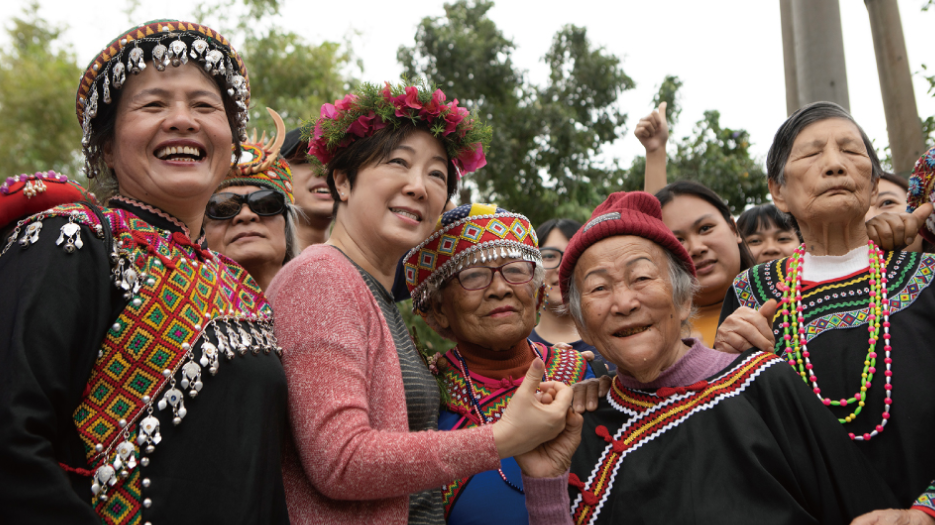
Around six years ago, Hu Chiu-Chin (first from left) was getting off work from Sazasa Elementary School when she spotted a group of wandering children gathered at a nearby bus stop. When she asked, they said they were waiting for the bus, but buses in the mountains can take at least an hour to arrive and the day was growing late. Fearing for their safety, she decided to stay with them.
“Chatting with them, I realized they were Sazasa people like me, but couldn't speak a word of their native tongue,” Hu worried that this culture might disappear, so she created a small classroom on plot #530 next to the bus stop so children can learn the Sazasa language while waiting for the bus. Starting with the most basic everyday vocabulary, they can learn their native language one phrase at a time.
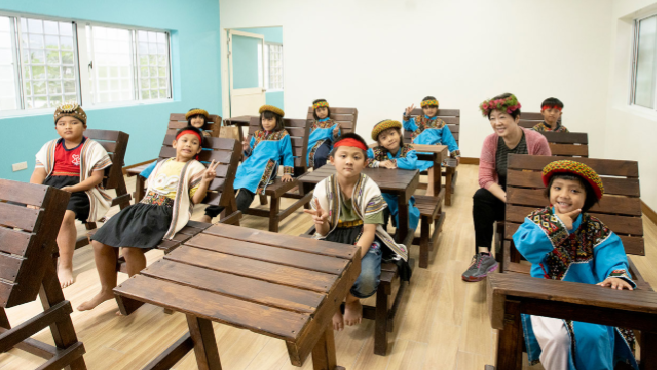
Researcher of indigenous and professor at National Taitung University, Ye Je-Chiuan (葉哲全), explained that inhabitants at the most productive age are leaving their tribes in large numbers, often leading to grandparents with less stamina to care for their grandchildren. Hu Chiu-Chin or as the children her, “Mama Wang”, doesn't let them run about and keeps them together to study the Sazasa language and do homework, preventing them from going astray.
For six years now, Hu Chiu-Chin has spent NT$500,000 to 600,000 out of pocket, cooking dinners for the children and even driving them to their homes if it's late. Classroom #530 has become their second home, and she has become a kind of second mother to them.
Not long after, Hu Chiu-Chin and the children had begun co-existing in a constant state of learning, but no one could've thought that one day the landlord would notify the property's sale and the dismantling of Classroom #530.
After the classroom was taken down, Hu noticed the children reverting to their previous hectic ways, but she wanted to spend a lifetime caring for them. The empty plot next to her house could be used, but the children would sit vulnerable under the elements and there wasn't enough money to build.
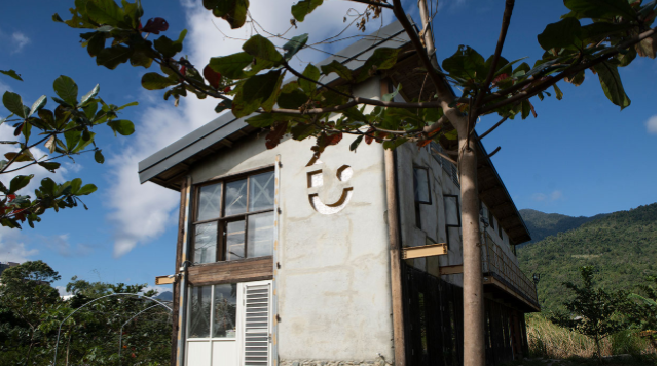
With a history of aiding in the aftermath of the 2014 Kaohsiung gas explosions and 2009's Typhoon Morakot, the TSMC Charity Foundation empathized with Hu's predicament. It then gathered a team of architects and structural technicians from TSMC's cover wafer factory to design a plan and, within just 30 days, the children had a new #530 Class.
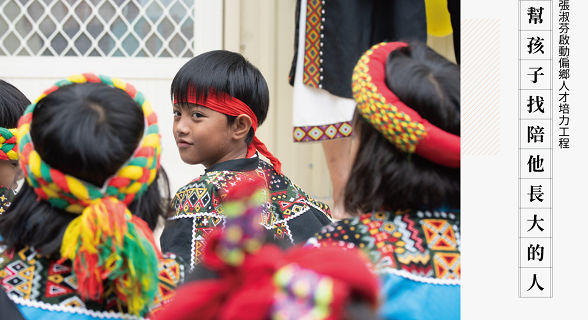
Always one to be on the front lines of charitable projects, Chairwoman Sophie Chang arrived on the first day of class to make sure Hu and the children had everything they needed. She noticed that many elderly members of the community liked to gather in the area, and so she added a small kitchen to be used throughout each day.
Sophie stated, “I trust this community has people who sell vegetables, and raise chickens and ducks, so providing a communal kitchen area can help tie together the Sazasa tribe's potential, and pulling everyone closer together.”
Professor Ye Je-Chiuan believes the #530 Class is a first step to solving rural shortcomings. Once the model between National Taitung University and Kids' Bookhouse is established, he not only plans to to bring it to the Sazasa community, but also hopes to bring “mentor buddies” so Sazasa children have more opportunities to explore themselves and find their future calling.